 Arbitrum docs
The batch poster
Learn the fundamentals of the Arbitrum batch poster.
Batch posting is a fundamental process for the operation in Arbitrum. It involves collecting multiple , organizing them into , compressing the data to reduce size, and sending these batches to the contract on the . This mechanism securely records transactions on the parent chain while optimizing for costs and performance.
How it works
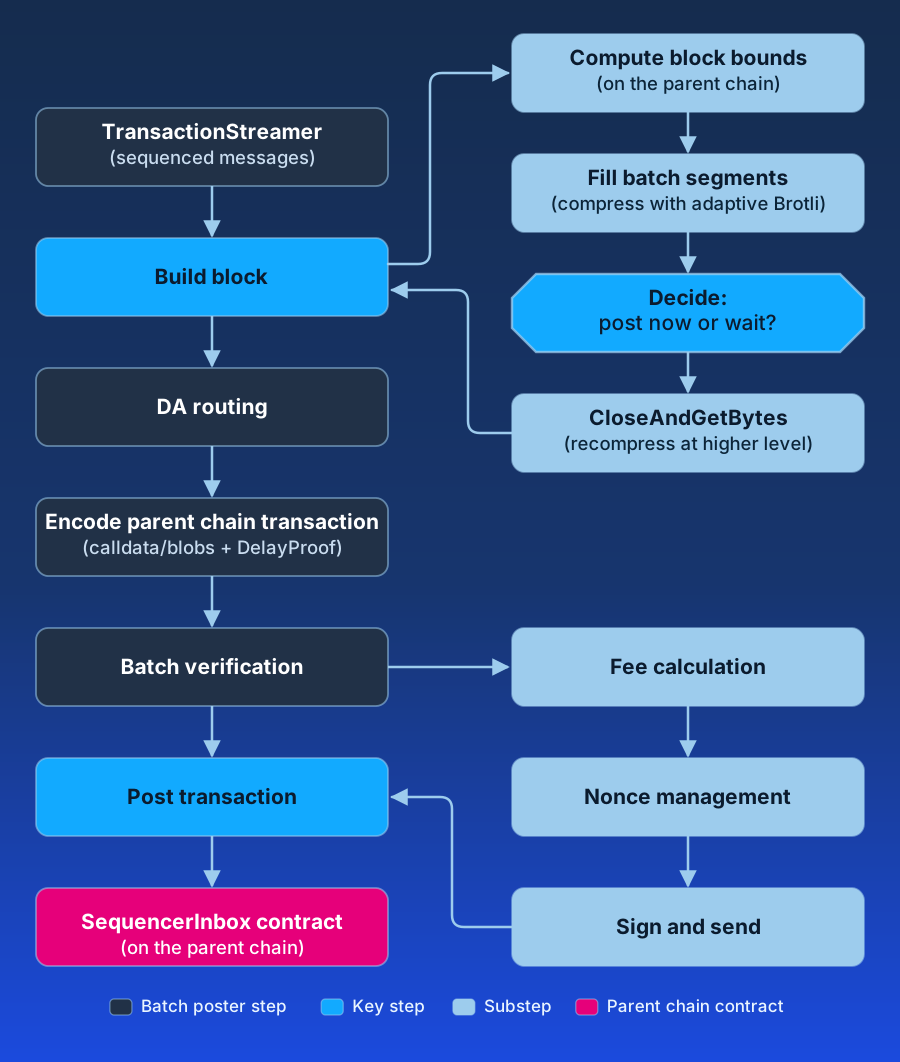
1. Messages arrive (upstream handoff)
A transaction’s journey into the begins after it’s already been sequenced. The poster pulls ordered child chain messages from the TransactionStreamer—that’s a handoff into the batch poster; sequencing, execution, and soft finality all happened before this point and live outside of the batch poster.
2. The poster decides where it stands
The main loop (MaybePostSequencerBatch) first does a safety check (refuse to post if a prior batch reverted), then asks “what batch number and parent chain nonce am I on?” and establishes the parent chain time/block window the batch will use. That window comes from reading the parent chain SequencerInbox contract’s MaxTimeVariation—a read-only handoff out to the parent chain.
3. Messages become a compressed batch
The poster receives messages in order, turning each into typed segments (the transaction itself, plus small bookkeeping notes for markers and time/block advances) and streaming them through Brotli. It watches size and segment-count caps, and adapts compression effort to how far behind it is—more compression when calm, less when backlogged. When it decides the batch is ready (full enough, old enough, or a delayed message is about to expire), it seals and recompresses it. This is the core work done inside the batch poster.
4. The data is routed to storage (DA handoff)
The sealed bytes are handed to a data availability (DA) provider—an offchain / committee or a custom backend—via the small Writer.Store interface, with a fallback to putting data directly on Ethereum (calldata or ). What comes back is either a (offchain) or the raw data (EthDA). The committee aggregation, , and blob KZG cryptography all happen behind that interface—handoffs that the batch poster isn’t involved in.
5. The batch is wrapped for the parent chain and self-checked
The poster builds calldata for the right SequencerInbox method (calldata vs. blobs, with or without a delay proof) and—as a correctness gate—replays the whole batch through the InboxMultiplexer (the same read/decode machinery used to consume batches) to confirm it decodes back to the exact original messages before anything is sent.
6. The transaction is shipped to the parent chain (DataPoster handoff)
The batch poster hands the calldata, blobs, and gas estimate to the DataPoster—the “shipping department.” From here, nonce selection, fee bidding, signing, queue persistence, and replace-by-fee-if-stuck are the DataPoster’s job, deliberately kept separate so the batch poster never has to deal with Ethereum gas mechanics. The DataPoster ultimately submits the transaction to the parent chain SequencerInbox contract.
7. Finality and feedback
Once the parent chain transaction confirms, the transactions cross from the Sequencer’s soft finality into hard finality anchored on the parent chain. The poster updates its backlog estimate (feeding back into compression effort and fee urgency), and a background revert watcher monitors the parent chain—if a posted batch ever fails onchain, it halts all posting for operator intervention.
Related resources
- The Sequencer and censorship resistance: batching, compression, and the Sequencer Inbox methods.
- Sequencer transaction flow: what happens before the handoff, from the queue to block creation.
- Gas and fees: how the parent chain pricer reimburses batch posting costs.
- Finality and reorgs: what parent chain finality guarantees, and the failure modes around posting.
- AnyTrust protocol: what the DAC does with the data behind the DA handoff.
- Run a batch poster and Batch poster troubleshooting: the operator view.
How is this guide?